Loading...
Serving Little Rock, AR and surrounding areas. (501) 621-2141
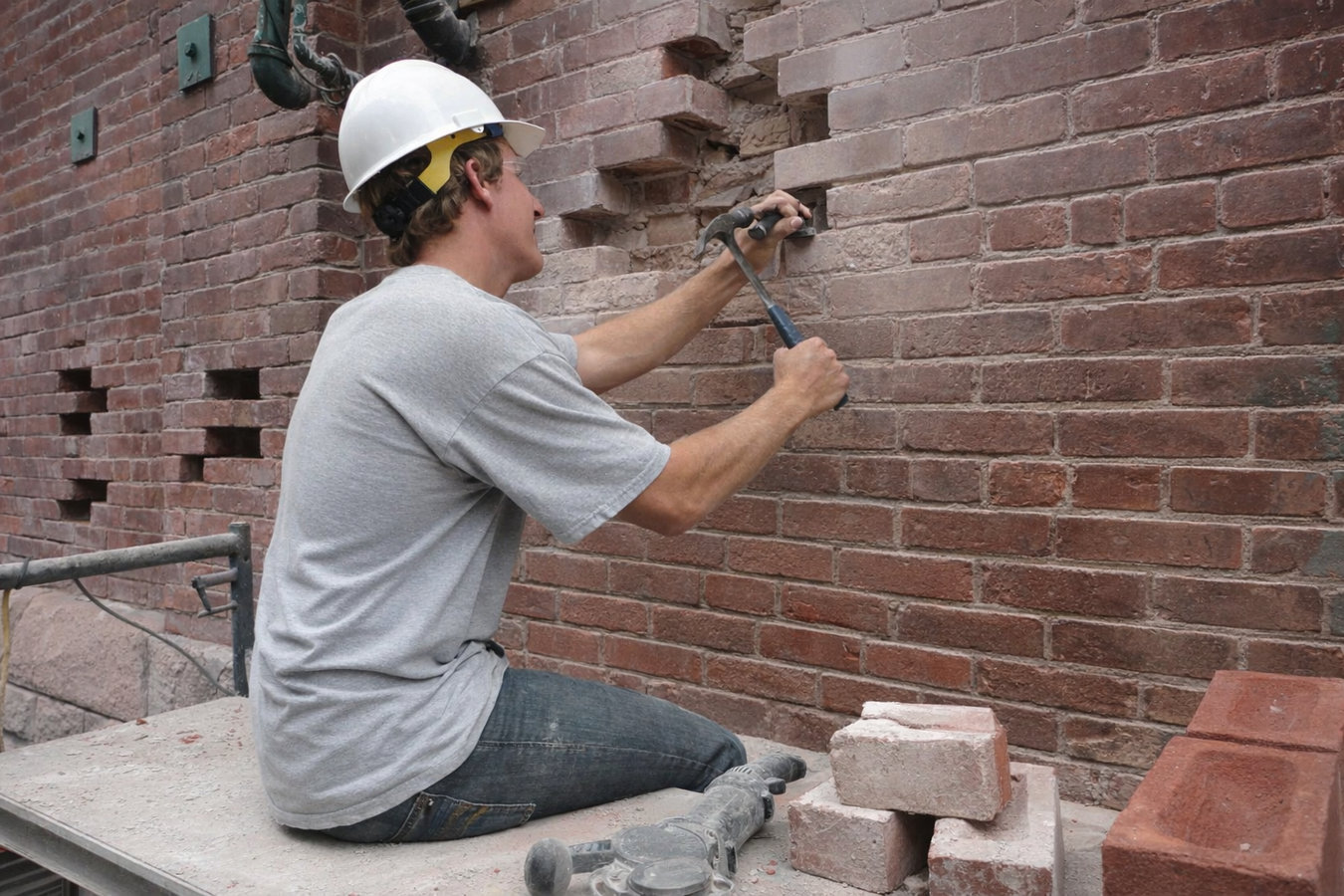
Cracked bricks and crumbling mortar let Little Rock rain into your home season after season. We replace damaged bricks and repoint joints so the problem is fixed once and stays fixed.
Brick repair in Little Rock covers everything from replacing cracked or spalled bricks to repointing the mortar joints that hold a wall together - most residential jobs take one to two days and protect your home from water infiltration for decades. The mortar between bricks fails first. It is softer by design, absorbing stress so the bricks themselves do not crack. When mortar breaks down, water follows, and that water puts your interior walls, framing, and insulation at risk.
Many Little Rock homeowners first notice the problem on their chimney, where weather exposure is most intense. If a chimney repoint is what you need, our tuckpointing service covers the full mortar-replacement process in detail. For brick walls that also have surface-level joint finishing needs, we handle driveway pavers and other hardscape masonry repairs that often come up alongside brick wall work.
Whether the damage is cosmetic or structural, the goal is the same: close the water pathway, replace what cannot be saved, and restore the wall so it looks and performs the way it should.
Press your thumb firmly against the mortar line between two bricks. If it crumbles, flakes, or feels soft and sandy, the mortar has broken down. This is one of the most common signs on Little Rock homes built before 1960, where the original mortar has simply reached the end of its lifespan.
Stair-step cracks - zigzagging diagonally along mortar joints rather than cutting straight through a brick - mean the wall has shifted. In Little Rock, this pattern often shows up on lower sections of walls and foundations because the clay soil underneath has moved. A mason should evaluate these before the next rainy season.
When the face of a brick starts to flake off in thin layers, it has absorbed water and is breaking down - a process called spalling. Little Rock's freeze-thaw cycles in winter are a common cause, especially on chimneys and north-facing walls. Once a brick starts spalling it will not stop on its own - those bricks need to come out.
Chalky white streaks called efflorescence form when water moves through the wall and carries mineral salts to the surface. It is not dangerous on its own, but in Little Rock's wet climate, that moisture pathway tends to get worse over time, not better. The real fix is addressing whatever is letting the water in - usually failing mortar.
We handle the full range of residential brick repair - from filling worn mortar joints on a garden wall to replacing multiple damaged bricks on a two-story exterior. For mortar work, we cut out the old material to the right depth, clean the joint, and hand-pack fresh mortar matched to your existing profile and color. For older Little Rock homes, we assess the original mortar composition before ordering anything new so the replacement mix does not damage bricks that were laid with a softer lime-based blend.
When individual bricks have cracked, spalled, or shifted, we remove them carefully and set replacements sourced to match as closely as possible. Full tuckpointing is often done alongside brick replacement - when one part of the wall fails, the surrounding joints usually need attention too. We also repair brick on steps, retaining walls, and chimneys, and where hardscape masonry like driveway pavers is part of the same project, we coordinate the work so everything is done in one visit when possible.
Best for walls where the bricks are still intact but the joints are crumbling, receding, or visibly failing - the most common repair on pre-1960 Little Rock homes.
Suited for walls with cracked, spalled, or hollow-sounding individual bricks that can no longer seal out water or support the wall above them.
Ideal for chimneys showing visible mortar gaps, white staining, cracked crowns, or flaking bricks near the top where freeze-thaw exposure is most intense.
Central Arkansas sits on expansive clay soils that swell when wet and shrink when dry. This seasonal movement puts constant stress on brick foundations, retaining walls, and the lower courses of brick on older homes. If you notice cracks that seem to open and close with the seasons, the soil is likely a contributing factor. Little Rock also receives more than 50 inches of rain a year and sees winter freeze-thaw cycles that expand any water trapped in small cracks - widening those cracks a little more each season. Homeowners here often notice fresh or worsened damage in late winter or early spring, which is why late spring is one of the busiest times for masonry contractors in this area.
Many neighborhoods in Little Rock - including Hillcrest, the Heights, and Pulaski Heights - have homes built between the 1920s and 1950s with original brick that is now 70 to 100 years old. Older brick is softer than modern brick and requires a softer mortar mix to avoid cracking the bricks themselves during repair. We work across Little Rock and the surrounding metro, including Benton and Conway, where brick homes from the same era are common.
We respond within 1 business day. Tell us where the damage is and how long you have noticed it. We will ask a few questions to give you a rough sense of scope before we ever come out - so you are not completely in the dark.
The contractor walks the damaged area with you, taps bricks to check for hollow spots, and assesses whether the damage is cosmetic or structural. You get a written estimate that breaks down the work and cost. No verbal-only quotes.
The mason removes damaged mortar or broken bricks using hand tools and a grinder, cleans the joints, and packs in fresh mortar or sets replacement bricks. Most residential jobs are done in one to two days. The crew cleans up debris before leaving each day.
We walk you through what was repaired and point out anything to watch going forward. Fresh mortar needs 24 to 48 hours before getting wet. The color will lighten slightly as it cures over the following weeks - that is completely normal.
We respond within 1 business day - no obligation, no pressure. After you submit, someone from our office calls to schedule a free on-site look so we can give you an accurate written estimate before any work begins.
(501) 621-2141Homes in Hillcrest, the Heights, and Pulaski Heights were built with softer, lime-based mortar. We assess the existing mix before ordering anything new and match the softness and composition accordingly. That protects your original bricks from cracking - a common result of using a hard modern mix on a wall built 70 or 80 years ago.
When your repair involves structural work or a chimney rebuild, the City of Little Rock requires a permit before work begins. We identify this at the estimate stage and pull the permit ourselves - so your paperwork is clean and there are no surprises at closing if you sell.
We cover Little Rock and 11 surrounding communities including North Little Rock, Benton, Bryant, Sherwood, and Conway. That reach means we know the housing stock in each area and can usually schedule an estimate within a few days of your first contact.
Replacement bricks rarely match perfectly on older homes - but we source salvaged bricks and work with specialty suppliers to get as close as possible. In a neighborhood where curb appeal matters, the visual difference between a careful match and a careless one is obvious from the street.
Every one of these details matters because brick repair done wrong can cause more damage than the original problem. We take the time to do it right the first time so you are not calling again in two years.
For guidance on repointing historic masonry, the National Park Service Preservation Brief 2 is one of the most thorough resources available on matching mortar to older masonry.
Focused mortar-joint restoration for walls where the bricks are intact but the joints have deteriorated and need fresh material packed in by hand.
Learn moreBrick and paver installation or repair for driveways, where the same mortar-matching and clay-soil considerations apply as on a home exterior.
Learn moreAfter every freeze-thaw winter, schedules fill up fast - call us now and lock in your spot before the summer heat makes mortar work harder to schedule.