Loading...
Serving Little Rock, AR and surrounding areas. (501) 621-2141
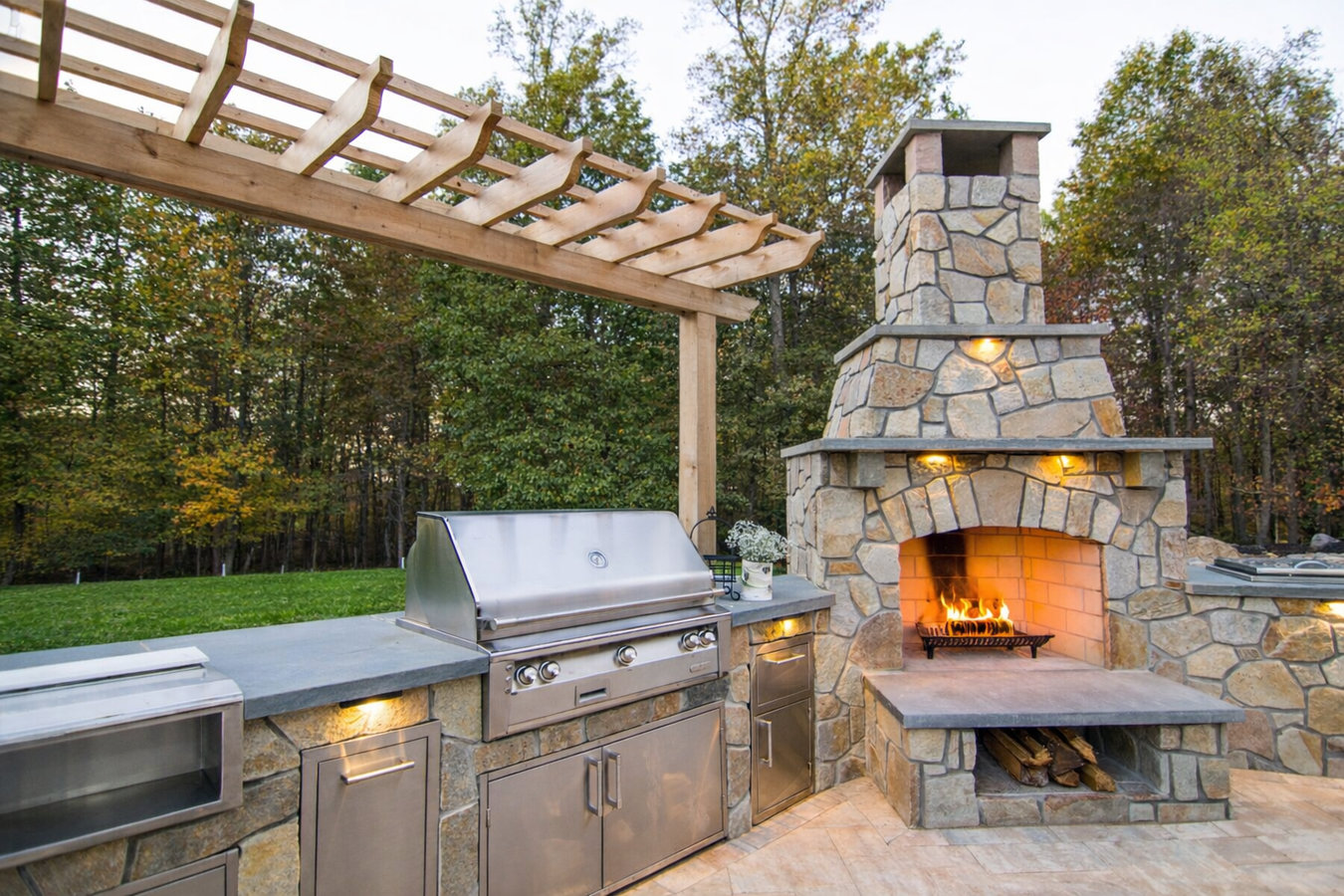
Little Rock's outdoor season runs nearly seven months. We build permanent brick and stone outdoor kitchens on proper foundations - structures that handle Arkansas heat, humidity, and winter freeze-thaw cycles without cracking or shifting.
Outdoor kitchen masonry in Little Rock involves building the permanent structural parts of your outdoor cooking space - grill surrounds, counter supports, side walls, and built-in features like pizza ovens or fireplaces - using brick, stone, or concrete block set in mortar on a properly engineered concrete slab, with most projects taking one to three weeks depending on size and site conditions.
Little Rock homeowners have a long outdoor season - roughly April through October - which makes a permanent, functional outdoor cooking space worth building right. The challenge here is the clay soil under most yards in the metro area. That soil moves with every wet and dry cycle, and a masonry structure sitting on a compromised or undersized slab will show cracks within a few seasons. Before any brick or stone goes up, the foundation has to be right. If you are also thinking about adding a fireplace to your outdoor space, our fireplace installation team can build that as part of the same project.
Many west Little Rock neighborhoods - Chenal Valley, Pleasant Valley, and others - are governed by HOAs with design review requirements for permanent outdoor structures. We handle the permit process through the City of Little Rock and can help you prepare HOA submission materials so the project does not stall before it starts.
Some of these are practical signs. Others are frustrations you have been living with for a while.
If you are moving a portable grill in and out of the garage before every cookout, you already know how much a fixed outdoor cooking space would change things. Little Rock's outdoor season runs nearly seven months - that is a lot of weekends spent wrestling with a grill cart before you can cook anything.
If your existing concrete patio has visible cracks, sections that have shifted up or down, or spots where water pools instead of draining away, the ground underneath has been moving. In Little Rock's clay soil, this kind of movement gets worse over time. A masonry contractor needs to assess whether the slab can carry a structure before anything permanent goes up.
Metal-stud and cement-board prefab outdoor kitchen frames are widely available, but they do not hold up in Arkansas heat and humidity the way masonry does. If you have seen one deteriorate at a neighbor's house - or if you have looked at the options and they feel like settling - that is a good sign you are ready for a permanent, built-in structure.
If guests naturally drift indoors when it is time to eat because there is no real cooking or serving space outside, your backyard is not doing what it could. A masonry outdoor kitchen gives you a permanent functional space that keeps everything outside - which in Little Rock is exactly where people want to be from April through October.
We build outdoor kitchens from concrete block, brick, and natural stone - starting with foundation assessment and slab preparation before any masonry goes up. A basic project might include a grill surround, a small counter, and a stone veneer finish. A mid-range project typically adds a bar section, built-in appliance cutouts, and a more detailed finish material. Larger projects can include pizza ovens, built-in refrigerator enclosures, or a connected outdoor fireplace. All masonry work uses Type S mortar formulated for outdoor exposure, and joints are finished to shed water rather than trap it - which matters in an Arkansas winter when freeze-thaw cycles can crack mortar that was not applied correctly. For projects that need a walkway connecting the kitchen to the rest of the yard, we handle that as part of the same scope of work.
We coordinate gas and electrical rough-in timing with licensed trade contractors so the masonry work and utility work happen in the right order. We also manage the permit process through the City of Little Rock from application through final inspection, and we can help you prepare HOA design review submissions for neighborhoods that require them. If your project includes a built-in fireplace, our fireplace installation team builds that component to NFPA clearance standards as part of the same project.
For homeowners who want a functional, permanent outdoor cooking station without a complex layout. Clean finish, solid foundation, fixed in place.
For homeowners planning regular outdoor entertaining. Includes multiple appliance cutouts, counter space, bar seating, and a finish material like stone veneer or brick.
For homeowners who want the full outdoor room. Includes a built-in cooking or heating feature alongside the kitchen structure - built as one integrated project.
Little Rock averages around 50 days per year above 90 degrees, and the outdoor entertaining season runs from roughly April through October. That long season makes an outdoor kitchen a genuinely useful space rather than an occasional luxury. But the same climate that makes outdoor living appealing here also makes the construction more demanding. The clay-heavy soil throughout the metro swells and shrinks with seasonal rainfall, and a masonry structure that is not sitting on a properly engineered slab will reflect that movement in cracks and shifting joints within a few years. We serve homeowners in Benton and Bryant as well, where the same soil and climate conditions apply and outdoor living spaces are increasingly common in newer subdivisions.
Little Rock winters are mild compared to northern states, but the city sees enough below-freezing nights to cause real problems for masonry that was not built with temperature swings in mind. Water that gets into small cracks in mortar can freeze, expand, and widen those cracks over multiple winters. A contractor who knows the local climate selects mortar mixes rated for outdoor exposure in this region and tools the joints so water sheds off rather than soaking in. The Brick Industry Association and the Portland Cement Association publish the material and mortar standards we follow to make sure outdoor masonry holds up through Arkansas's seasonal swings.
We start with a short conversation to hear what you have in mind - size, materials, appliances, and timeline. We reply within one business day. This call helps us come prepared for the site visit so we are not wasting your time asking basic questions on the day we show up.
We visit your property to look at the existing patio or yard area, assess the soil and slab conditions, and talk through your layout in person. You will leave this visit with a clear picture of what is possible and what it will realistically cost - including whether a new foundation pad is needed before any masonry starts.
We pull any required City of Little Rock permits before work begins and help you prepare HOA design review submissions if your neighborhood requires them. This process can take one to four weeks, so we build it into the timeline from the start - no scrambling once work is already scheduled.
We prepare the foundation, then build the kitchen structure course by course - checking for level and square at every stage. Once the city inspector signs off on any permitted work, we walk you through the finished structure and explain the curing period before you fire up the grill.
We will visit your backyard, walk through your options, and give you a written estimate - no obligation, no sales pitch.
(501) 621-2141We do not skip the soil and slab assessment to give you a faster bid. Every outdoor kitchen quote we provide includes an evaluation of what the structure will be sitting on - because a kitchen built on a compromised slab in Little Rock clay is a problem waiting to happen, and we would rather catch that before construction than after.
We apply for all required City of Little Rock permits, schedule the inspections, and provide you with the paperwork when the job is done. Many homeowners are surprised to learn outdoor kitchens with gas or electrical require city permits - we handle all of that so you are not chasing it yourself.
A large share of outdoor kitchen requests in Little Rock come from west Little Rock neighborhoods governed by HOAs with design review requirements. We have prepared submissions for projects in communities like Chenal Valley and know what those committees typically want to see - which means fewer revision cycles and fewer delays on your end.
We use Type S mortar for all exterior masonry and finish joints to shed water. That choice is about durability in Little Rock's freeze-thaw cycles, not just appearance. Contractors who use interior mortar mixes on outdoor work or skip joint finishing create kitchens that look fine at first but crumble after a few winters.
Every project we complete in Little Rock is permitted, inspected, and built to hold up through the seasons this climate actually delivers. A masonry outdoor kitchen from LRM Little Rock Masonry is an investment that adds real, lasting value to your home - not something you are patching or replacing in five years.
Brick, stone, and paver walkways connecting your outdoor kitchen to the rest of your yard - built on a proper base to stay level through Little Rock's clay soil movement.
Learn moreAn outdoor or indoor masonry fireplace built as a standalone project or integrated into your outdoor kitchen design to extend the entertaining season into fall.
Learn moreLittle Rock's spring project season fills quickly - reach out now to hold your spot before summer, so your kitchen is ready when the outdoor season starts.