
Loading...
Serving Little Rock, AR and surrounding areas. (501) 621-2141
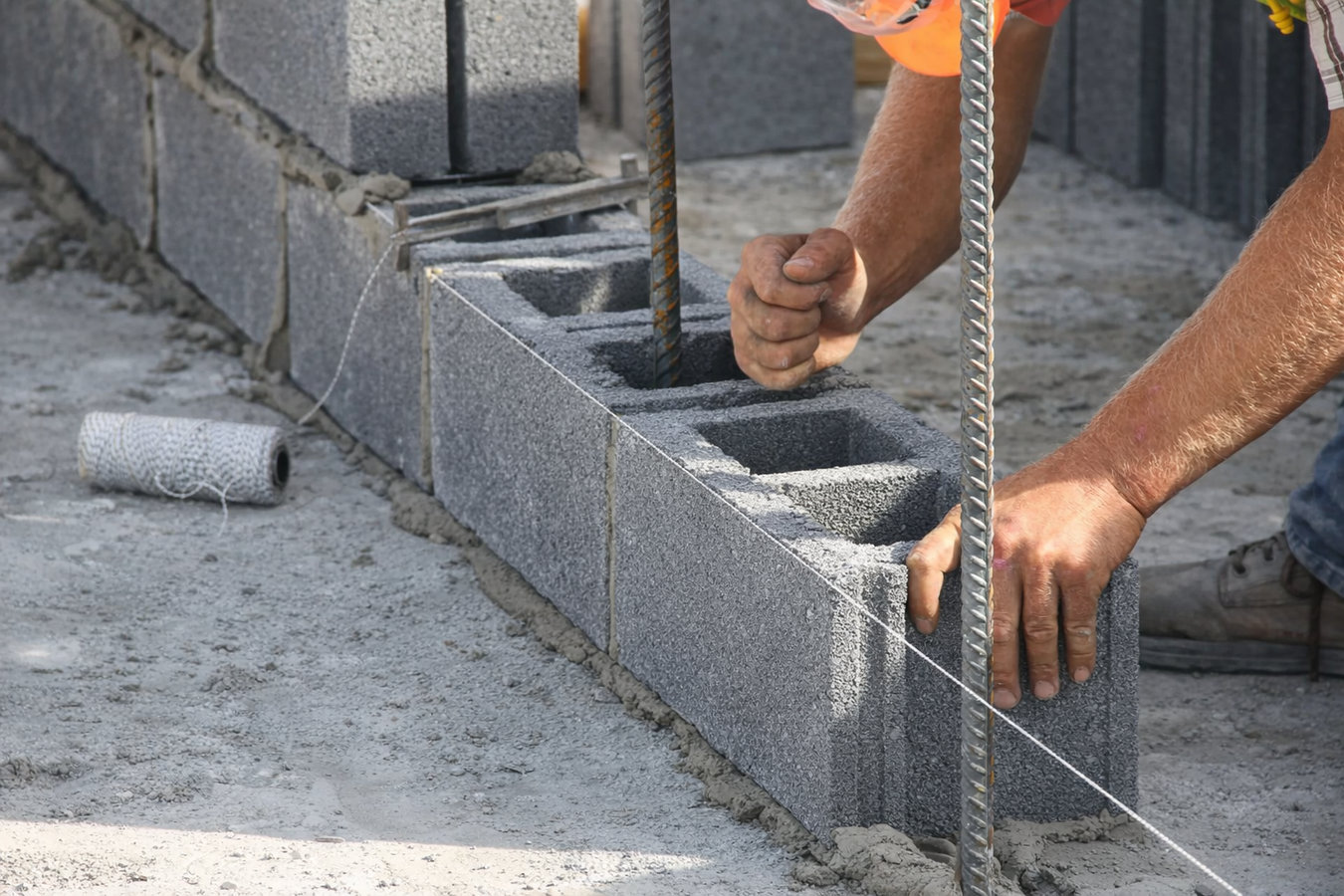
Little Rock clay soil moves every season. We install concrete block foundations with proper steel reinforcement, waterproofing, and drainage so your home sits on something solid for decades to come.
Foundation block wall installation in Little Rock uses concrete masonry units stacked in a running bond pattern, reinforced with steel rods set in the hollow cores, and filled with poured concrete to carry the weight of your home and resist soil pressure - most residential projects take one to three weeks depending on the size of the home and site conditions.
Homeowners in Little Rock deal with clay soil that expands and contracts with every wet and dry season. That constant movement is one of the main reasons block foundation walls in older neighborhoods like Hillcrest and the Heights develop cracks or start to bow over time. Whether you are building new or replacing an aging foundation, proper reinforcement and drainage are not optional in this area - they are what separates a wall that holds for 50 years from one that shows problems in five. If your existing foundation has also created issues at the floor level, our foundation repair service can address those at the same time.
Every project we take on in Little Rock includes a permit pulled through the City of Little Rock Planning and Development office. That means an independent city inspector verifies the work at key stages before anything gets covered up - which protects your investment and keeps your home's resale history clean.
Some of these signs appear gradually over years. Others show up fast after a wet season. Either way, they are worth taking seriously.
Cracks that run at an angle through the blocks - especially ones wider at one end - signal that the wall is shifting or settling unevenly. In Little Rock, this pattern is often tied to clay soil expanding and contracting through wet and dry seasons, putting uneven pressure on different sections of the wall. A crack wide enough to slip a quarter into should be evaluated by a professional right away.
Stand in your basement or crawl space and look at the foundation walls from the side. If any section curves or leans toward the interior of the house rather than standing straight, that wall is under more pressure than it was designed to handle. This is especially common in older Little Rock homes where the original foundation was built without the steel reinforcement that helps walls resist soil pressure over time.
If you notice water on the floor or walls of your basement or crawl space after a significant rainstorm, your foundation wall is letting moisture through. Little Rock's heavy spring rains and clay soils create conditions where water pools against foundation walls for extended periods. Staining, white chalky residue on the wall surface, or a musty smell are all early warning signs of this problem.
Interior doors that used to swing freely but now stick or fail to latch, or gaps forming at the corners of window frames, can mean your home's frame is shifting because the foundation beneath it is moving. This symptom is easy to dismiss as a minor nuisance, but in older Little Rock homes on clay-heavy soil it often signals something more significant happening at the foundation level.
We handle new foundation block wall installation for homes with crawl spaces or basements, as well as full replacement of failing foundations on older Little Rock properties. Every wall we build uses concrete masonry units set in mortar with steel reinforcing rods placed through the hollow cores at specified intervals - those cores are then filled with poured concrete to lock everything in place. Waterproof coating is applied to the exterior face of the wall before the soil is backfilled, and the final grade slopes away from the foundation so rainwater does not pool against it. For homeowners who need structural block work on above-grade walls or outbuildings, our concrete block walls service covers those projects.
We also assess and repair partial sections of existing foundations where the overall structure is sound but specific areas have cracked, bowed, or lost mortar integrity. In many cases, catching a problem section early means you can repair rather than replace - which saves significant cost. For homes with foundation issues that have led to broader structural problems, we coordinate with our outdoor kitchen masonry team when a project involves both the foundation perimeter and adjacent masonry features.
For new construction or full foundation replacement. Includes steel reinforcement, waterproofing, and city permit - sized and engineered for your specific home.
For homes where specific sections have cracked or bowed but the overall structure is still serviceable. A cost-effective option when damage is caught early.
For foundations showing moisture intrusion but still structurally sound. Exterior coating plus drainage corrections to stop water before it becomes a bigger problem.
Little Rock sits on expansive clay soil that swells with every spring rain and shrinks back down each summer. That cycle puts constant, shifting pressure on foundation walls year after year - and it is one of the main reasons homes in established neighborhoods like Hillcrest, Pulaski Heights, and the Heights show foundation movement that newer homes in sandier soil regions simply do not experience. A contractor treating Little Rock clay the same as sandy or loamy soil is not accounting for conditions that have been causing foundation problems in this city for decades. We also serve homeowners in North Little Rock and Jacksonville, where the same clay soil conditions affect foundations throughout the metro.
Little Rock also averages around 50 inches of rain per year, with the heaviest months in spring - and that moisture cycle accelerates wear on mortar joints and increases the risk of water seeping through block walls that were not properly sealed. Scheduling foundation work during drier stretches - typically late summer through fall - gives mortar the chance to cure properly and waterproof coatings time to set before the next heavy rain season. The National Concrete Masonry Association sets the standards our work follows for block selection, reinforcement spacing, and mortar composition - standards designed specifically for the conditions that matter in climates like ours.
We will reply within one business day to schedule an in-person assessment. Foundation work is too site-specific to price accurately over the phone - we need to see the soil conditions, the existing foundation, and the drainage situation around your home before giving you a written estimate.
We walk the perimeter, inspect your crawl space or basement, and assess drainage. You will get a written estimate that breaks out labor and materials separately - no vague totals. We explain what we found and why our recommendation makes sense for your specific property.
We handle the City of Little Rock building permit from start to finish. Permit approval typically takes a few business days to two weeks depending on current workload. No work begins until the permit is in hand. If excavation is needed, we tell you in advance which areas of your yard will be affected.
We lay blocks, set steel reinforcement, fill cores with concrete, and apply waterproof coating before backfilling. A city inspector visits before backfill to verify the work. Once the inspection passes, we backfill, regrade to direct water away from the foundation, and clean the work area completely.
We will visit your property, explain exactly what we see, and give you a written estimate - no obligation, no pressure.
(501) 621-2141Our license is on file with the Arkansas Contractors Licensing Board - you can verify it yourself at aclb.arkansas.gov before you hire. That license means we have met the state's minimum standards for experience and financial responsibility, and it gives you a place to file a complaint if something ever goes wrong.
We apply for the City of Little Rock building permit, schedule every required city inspection, and give you copies of the paperwork when the job is done. You will have documentation you can hand to a buyer or title company without hesitation - no surprises at closing.
Little Rock serves as the base for all of our work, which means we understand how the local clay soil moves across seasons and how to design around it. Every wall we build here accounts for that soil movement from the start - so the reinforcement spacing and drainage system match the actual conditions, not a generic specification.
Little Rock gets around 50 inches of rain a year. A wall built without exterior waterproofing will show moisture problems within a few seasons in this climate. We include waterproof coating on every foundation wall we build because that is what the conditions here require, not as an optional upgrade to quote separately.
Every project we complete in Little Rock meets the standards set by the Arkansas Contractors Licensing Board and the City of Little Rock building department. You are not just getting a wall - you are getting a permitted, inspected foundation with documentation you can use.
Permanent brick, stone, and block outdoor kitchens built to handle Little Rock summers and winters, engineered on a proper foundation slab.
Learn moreTargeted repairs for cracked, bowing, or settling foundation walls so you can fix the problem without replacing the entire structure.
Learn moreFall and late summer are the best windows for foundation work in central Arkansas - contact us now to schedule before the spring rain season fills the calendar.