
Loading...
Serving Little Rock, AR and surrounding areas. (501) 621-2141
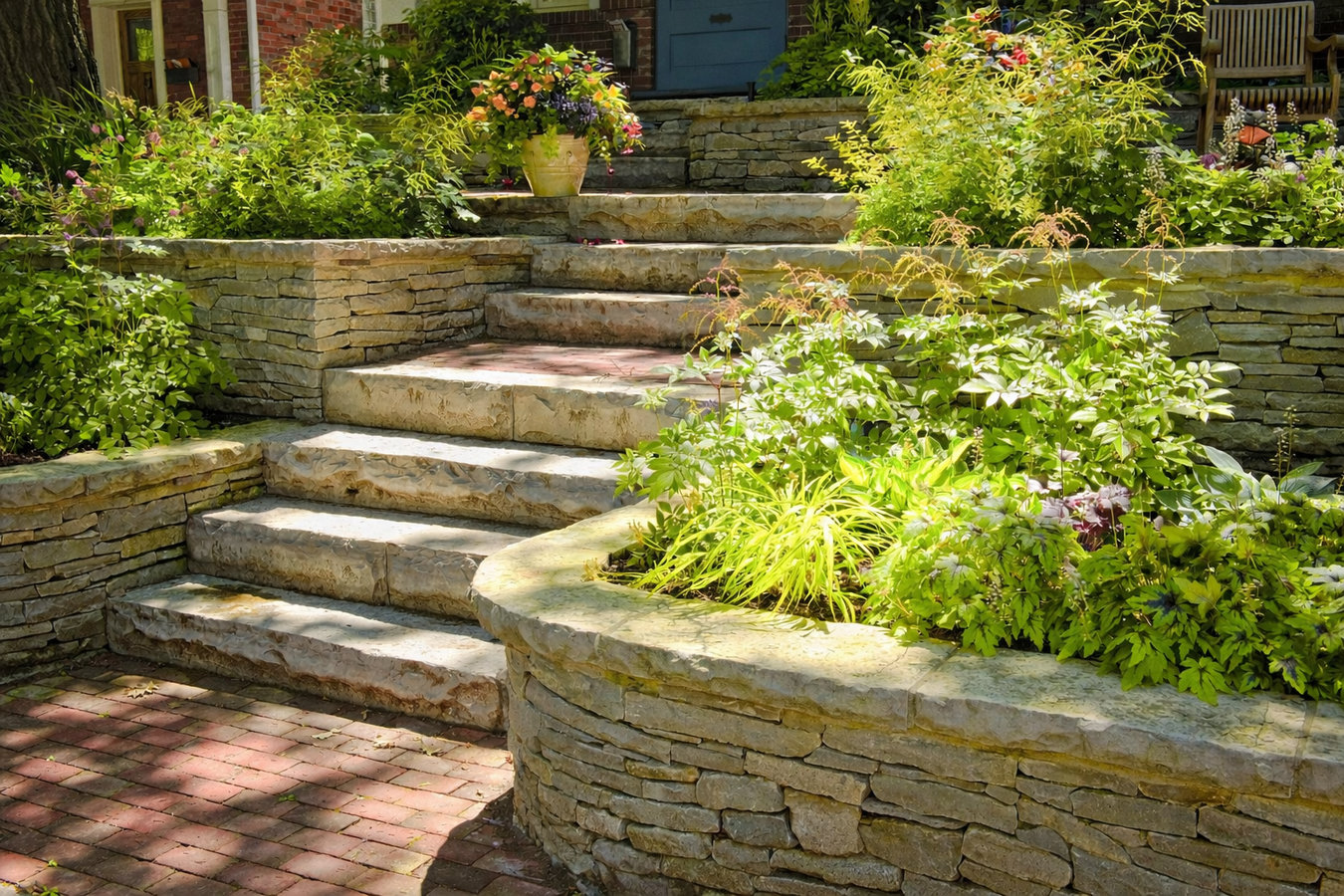
Little Rock slopes wash a little more every spring. We build retaining walls designed for local clay soil and heavy rainfall - walls that hold your yard in place and give you back the outdoor space you are losing to erosion.
Retaining wall construction in Little Rock holds back soil on a slope so it does not slide, erode, or wash into your yard, driveway, or foundation - most residential walls under four feet take two to four days to complete and include drainage installation behind the wall to manage Little Rock rainfall. The wall also creates flat, usable space where there was previously just unusable slope.
A lot of Little Rock homeowners in hillside neighborhoods - Hillcrest, the Heights, Pulaski Heights - have inherited slopes that were never properly stabilized. Decades of spring rain have slowly washed soil away, and older timber or dry-stacked stone walls that were installed years ago are well past their useful life. Retaining wall construction is the permanent answer to that cycle. If your yard has an area near the wall that also needs a more solid surface for walking, our masonry restoration team can assess adjacent hardscape at the same time.
Drainage is not optional - it is the difference between a wall that stands for 30 years and one that leans by year five. We install compacted gravel and drainage pipe behind every wall we build, because the pressure from trapped water is the most common reason walls fail in central Arkansas.
Some of these signs are subtle at first. By the time they become obvious, the problem is usually bigger and more expensive than it needed to be.
If you notice bare patches, small gullies, or muddy water trailing across your yard or driveway after a heavy rain, your slope is eroding. Little Rock spring storms can accelerate this quickly - what looks like a minor issue in April can become a significant problem by June. A retaining wall stops that cycle before it reaches your foundation.
A wall starting to tilt forward or showing horizontal cracks near the middle is under stress it was not designed to handle. This is especially common with older timber or dry-stacked stone walls in Little Rock hillside neighborhoods, where decades of clay soil movement have taken their toll. A leaning wall is much cheaper to replace proactively than to repair after a collapse.
If rainwater consistently flows toward your house rather than away from it, the grading around your home may be working against you. In Little Rock clay soil, that water does not drain quickly - it sits against your foundation and can eventually cause cracks or moisture problems inside. A retaining wall combined with proper regrading can redirect that water before it becomes expensive.
If part of your yard is too steep to mow without sliding, or you have given up on it because it is just an awkward hillside, a retaining wall can turn that unusable space into a flat, functional area. Many Little Rock homeowners use terraced walls to create level garden beds or outdoor living areas where there was previously nothing but a problem.
We build retaining walls from concrete block, natural stone, and brick - each with a drainage system installed behind the wall as part of the standard scope. Segmental concrete block walls are the most common choice for residential yards in Little Rock: they are durable, handle clay soil movement well, and are available in a range of colors and textures. Natural stone walls suit homeowners who want a more natural or rustic look that blends into landscaping. For large projects or walls approaching the four-foot permit threshold, we also handle the City of Little Rock permit process from start to finish.
On sloped lots where a single wall is not enough, we build terraced systems - multiple walls at different elevations that step up the hillside and create flat planting or outdoor living areas between each tier. If the project includes other hardscape work, we can coordinate with our masonry restoration team for any adjacent surfaces. And for projects that involve larger structural walls or underground block construction, our concrete block walls service covers those needs.
Best for most residential yards. Durable, widely available, and designed to handle soil pressure and drainage requirements.
Ideal for homeowners who want a wall that looks as natural as the landscape around it. Higher material cost, long service life.
Suits lots with significant slope where one wall is not enough. Creates multiple level tiers for planting or outdoor living.
Little Rock gets around 50 inches of rain per year, with the heaviest rainfall concentrated in spring. That is well above the national average, and it means slopes and hillsides in residential yards take a real beating between March and May. At the same time, the expansive clay soil throughout the area swells when it absorbs water and shrinks when it dries - movement that puts extra stress on any wall not built with that cycle in mind. A wall designed for a drier climate or sandier soil will lean, crack, or wash out much sooner in central Arkansas. We serve homeowners in Cabot and Sherwood as well, where hillside lots and clay soil present the same challenges.
Many of Little Rock's established neighborhoods were developed on hilly terrain long before modern grading and drainage standards existed. Homeowners in Hillcrest, the Heights, and Pulaski Heights often inherit slopes that have been slowly eroding for years, sometimes with old walls that were never properly drained. The University of Arkansas Cooperative Extension Service has guidance on managing erosion and soil movement on residential lots in Arkansas - a useful reference if you want to understand what is happening in your yard before calling for estimates.
We respond within 1 business day. We do not quote retaining wall jobs over the phone - the slope, soil, and drainage patterns on your property all affect the scope. We schedule a free on-site visit at no obligation.
We assess the slope, soil conditions, drainage, and access for equipment. You receive a written quote that breaks out excavation, materials, drainage, backfill, and cleanup - no bundled totals.
If your wall will exceed four feet, we apply for a City of Little Rock building permit before any work begins. Permit processing typically adds one to two weeks. We handle all the paperwork - you just need to be reachable if the city has questions.
Excavation and base preparation come first, then wall construction and drainage installation in the same sequence. Before we leave, you walk the finished wall with us and we show you where the drainage outlets are and what to watch for going forward.
Free on-site estimate. We handle permits for taller walls. No surprises on the final bill.
(501) 621-2141Water pressure behind the wall is the most common reason retaining walls fail in central Arkansas. We install compacted gravel backfill and drainage pipe behind every wall we build - it is not an add-on, it is standard. That is what keeps the wall standing when Little Rock gets a heavy spring rain.
Little Rock averages around 50 inches of rain per year, well above the national average. We design drainage slopes, base depths, and backfill systems with that reality in mind - not with a standard spec that assumes average rainfall.
We apply for City of Little Rock building permits, coordinate with the city during any required reviews, and schedule inspections. You do not have to call the planning department or figure out what is required. That documentation also protects you at the time of resale.
We have built retaining walls in Hillcrest, the Heights, Pulaski Heights, and across West Little Rock. We know the slope patterns, soil conditions, and the specific HOA guidelines that apply in newer subdivisions like Chenal Valley.
Every retaining wall we build is designed to handle what Little Rock actually throws at it - not what an average climate would require. The National Concrete Masonry Association guidelines we follow set standards for base depth, drainage, and block placement that are specific to the soil and load conditions your wall will face.
Restore adjacent brick or stone hardscape that has weathered the same seasonal movement your slope has.
Learn moreFor structural block wall needs beyond the typical residential retaining wall, including larger freestanding and below-grade walls.
Learn moreSpring rain season is coming - get your slope stabilized before the ground gets saturated again.