Loading...
Serving Little Rock, AR and surrounding areas. (501) 621-2141
Little Rock winters are short but damp, and a properly built fireplace changes how your main living space feels. We handle the full build - from permits to the final walkthrough.
Fireplace installation in Little Rock means designing and building a fire system - firebox, chimney, hearth, and surround - that fits your home, passes city inspection, and is safe to use for decades - most projects run two to eight weeks from first call to final inspection depending on type and scope. A true masonry fireplace is built brick by brick on-site and becomes a permanent part of your home's structure. A prefabricated gas or electric insert can go in much faster. Your choice shapes everything else: the cost, the timeline, and what your home needs to support it.
Little Rock requires a building permit for nearly every fireplace installation. The permit process is not a burden - it means the city inspects the finished work independently, which protects you. We pull the permit and schedule the inspection so you do not have to manage any of that paperwork. If you have an older home in Hillcrest, Pulaski Heights, or Stifft Station, we start with a close inspection of any existing chimney before recommending an approach - older chimneys can look fine from the outside but have cracked liners or failed mortar inside.
A new fireplace pairs naturally with a properly maintained chimney. If your existing chimney needs attention before or after installation, our chimney repair service handles that work in the same visit when possible.
Many older Little Rock homes - especially in Hillcrest and Pulaski Heights - have original chimneys that were bricked up when the previous owner switched to central heat. If your home has a chimney that has been sitting unused, a contractor can assess whether it is structurally sound and ready to support a new fireplace or needs repairs first.
Little Rock winters are short but damp, and that chill can make a room feel colder than the thermostat suggests. If you pile on blankets in the main living area while the rest of the house feels fine, a fireplace adds targeted warmth exactly where you spend the most time - something central heat cannot replicate.
If you have pulled back drywall or paneling and found a sealed fireplace opening, the original structure may still be there. Restoring a sealed fireplace is often less expensive than building from scratch, but it requires a professional inspection first. Do not assume it is ready to use without an evaluation.
If your current fireplace smokes into the room when lit, or if you can see cracks in the firebox or mortar joints, those are signs the existing structure needs professional attention. In some cases repairs are straightforward; in others, a full rebuild makes more sense. Using a damaged fireplace is a fire and air quality risk.
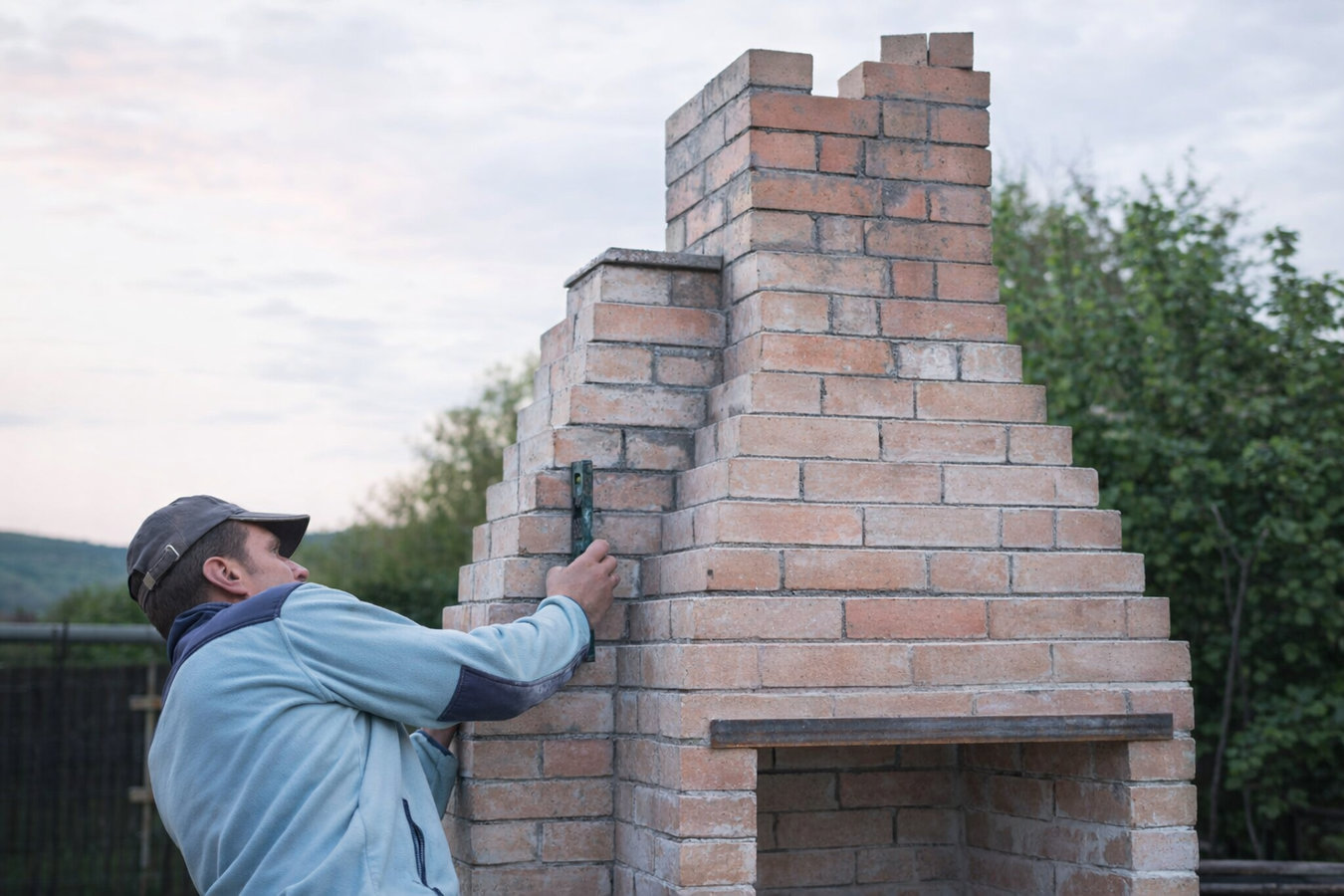
We build and install wood-burning, gas, and full masonry fireplaces across Little Rock and surrounding areas. A full masonry build starts with a properly engineered footing - critical in central Arkansas where clay soil expands and contracts with the seasons - and continues through the firebox, chimney, hearth, and decorative surround. We size the chimney correctly for the firebox so smoke drafts properly and gases exit the home as they should. Every gas installation coordinates with a licensed plumber for the line run so the project is inspected and code-compliant from the start.
If you want to add a decorative stone or brick surround to an existing insert, that work ties closely to our stone veneer installation service, which covers facing work around fireplace openings and accent walls. For homes with an existing chimney that needs structural work before installation can proceed, our chimney repair team handles the assessment and repair in the same project. The Chimney Safety Institute of America publishes homeowner-friendly guidance on what a properly installed fireplace and chimney system looks like.
Best for homeowners who want a permanent, built-in feature with a full brick or stone chimney that adds genuine resale value and lasts the lifetime of the home.
Ideal for Little Rock homeowners who want instant warmth at the flip of a switch without the work of storing and managing firewood through a short heating season.
Suited for older Little Rock homes where a fireplace was bricked up at some point and the original structure may still be sound enough to reopen and use.
Little Rock sits in a climate zone where January lows average around 30 degrees Fahrenheit - cool and often damp, but not brutally cold. That mild-but-damp character makes gas fireplaces particularly practical here. You get instant heat and ambiance on a cold evening without managing firewood through a short season. Many homeowners in Little Rock's older neighborhoods - Hillcrest, Pulaski Heights, and Stifft Station - are also discovering sealed or abandoned chimneys during renovations. These structures were built into homes from the 1920s through the 1960s, and a significant portion of them are still structurally sound enough to support a fireplace with proper inspection and preparation.
Central Arkansas clay soils are an important consideration for any masonry fireplace build. The soil expands when wet and contracts when dry, and that movement puts stress on a heavy structure sitting on a shallow footing. We account for local soil conditions in the foundation design - a step that matters most for homeowners near the Arkansas River bottomlands or in low-lying areas. We serve homeowners across Little Rock and nearby communities including Conway and Russellville, where similar older housing stock and soil conditions make this planning equally important.
We respond within 1 business day. We ask what type of fireplace you are considering and whether there is an existing chimney. At the site visit, we assess the space, check for gas lines or structural factors, and explain what the installation will actually involve before you commit to anything.
You receive a written estimate itemizing labor and materials. Once you approve, we apply for the required permit through the City of Little Rock - a process that typically takes a few business days to two weeks. We handle all the paperwork; you just need to be available for the inspection visit.
A prefabricated gas or electric fireplace typically installs in one to two days. A full masonry build with a new chimney takes one to three weeks on-site. Expect noise, dust, and some disruption around the work zone - we cover nearby furniture and flooring before starting.
After installation, the city inspector visits to verify the work meets safety standards. We schedule the appointment and are present for it. Once the inspection passes, we walk you through how to operate the fireplace and explain the break-in process if it is a new masonry build.
We respond within 1 business day. No obligation, no pressure. After you submit, someone from our office will schedule a free on-site visit so we can give you an accurate written estimate and talk through your options.
(501) 621-2141Little Rock requires a permit on nearly every fireplace installation. We apply for the permit, coordinate the city inspection, and make sure the work passes the first time. You do not have to manage any of the paperwork or scheduling.
A masonry fireplace is one of the heaviest structures in a home. Central Arkansas clay soil expands and contracts with every wet-and-dry cycle. We design the footing for local soil conditions so the fireplace stays level and crack-free for decades - not just for the first few years.
We have inspected and worked with original chimneys in Hillcrest, Pulaski Heights, and Stifft Station - homes built from the 1920s through the 1960s. We give you a straight answer about what condition the existing structure is in before recommending an approach.
We have completed fireplace installations for homeowners in Little Rock and the surrounding metro area. Local references are available on request - ask us for projects completed in neighborhoods similar to yours.
A fireplace is a permanent part of your home, and it should be built by a contractor who knows the local permit process, the soil conditions, and the older home construction common in Little Rock. Those details are what separate a fireplace that works safely for 30 years from one that causes problems a few years in. The National Fire Protection Association publishes the safety standards that govern chimney and fireplace construction - we build to those standards on every project.
Add a stone surround or accent wall around your new fireplace for a finished look that complements the masonry build.
Learn moreRestore a cracked or deteriorated chimney so your new or existing fireplace vents properly and safely.
Learn moreFall booking slots fill fast - lock in your project now so your fireplace is finished and inspected before the first cool nights of the season arrive.